Addressing bleeding hemorrhoids: treatments and prevention
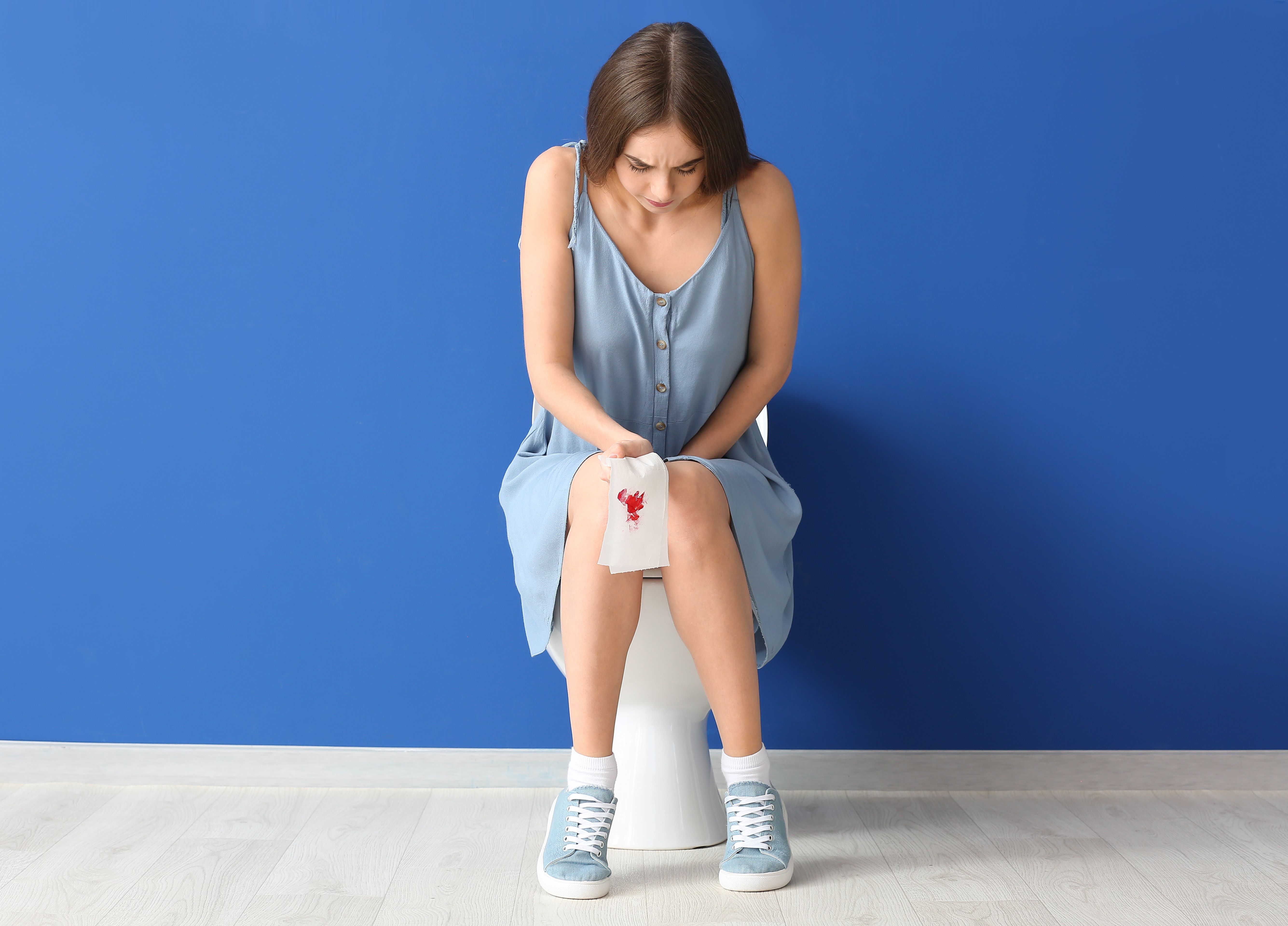
Hemorrhoids may cause mild to severe bleeding when they become damaged or irritated. If bleeding is heavy or persistent, it is advised to contact a doctor.
What are the causes of bleeding hemorrhoids?1-3
The anal canal is lined with hemorrhoidal tissues that consist of muscles, connective tissues, and a network of blood vessels. Whenever pressure is exerted on these tissues, such as when you are passing a stool, the tissues will swell. In most cases, the tissues will return to their normal size after the pressure eases. However, when excessive or prolonged pressure is placed, the vessels inside the tissues can bulge and cause an abnormal pile, known as a hemorrhoid.
Hemorrhoids often remain inside the anal canal, but sometimes they bulge outward from the anus and become visible outside of the body. Either type – internal or external hemorrhoids – can bleed, but only external ones are painful.
Bleeding hemorrhoids can occur as a passing stool nicks a blood vessel in the swollen pile. The same can occur with straining, causing the thinned walls of a blood vessel to spontaneously burst and bleed. This is why hemorrhoids can bleed:
- After a bowel movement, especially if there is straining
- With diarrhea or constipation
- After sitting or standing for a long time
- During pregnancy
- When lifting a heavy object
- If a blood clot blocks the blood supply, leading to ulceration and dead tissue
What are the symptoms of bleeding hemorrhoids?1,2
Bleeding is common with internal hemorrhoids. The bleeding is generally painless and causes streaks of bright red blood:
- On toilet paper when wiping
- On the outside of a stool
- In drops in the toilet bowl
If the blood is dark red, you should notify a doctor as this can indicate a problem higher up in the gastrointestinal tract.
What about the thrombosed hemorrhoid?1,2
External hemorrhoids are more likely to be painful but less likely to bleed. However, bleeding can occur if there is a thrombosed hemorrhoid. This is a type of hemorrhoid caused when a blood clot obstructs a vein in or around the anal canal.
As the swelling increases, pressure from surrounding tissues or stool can cause the hemorrhoid to rupture and bleed, often at the end of a bowel movement. This can lead to significant bleeding. There may also be severe pain.
When these hemorrhoids bleed, the blood will usually be darker because the blood inside will have pooled and oxidized. You may also notice tiny clots on toilet paper or stools.
A thrombosed hemorrhoid needs urgent treatment. Without treatment, this type of bleeding hemorrhoid can compress and damage the blood vessels in surrounding, healthy tissues.
When to see a doctor in the case of bleeding hemorrhoids?1-3
In most cases, hemorrhoids may be treated at home. However, it is important to speak with a health care professional if you experience severe rectal bleeding, hemorrhoid symptoms that last longer than 1 week with home treatment, or any of the following symptoms:
- Changes in stool consistency or color
- Severe anal or rectal pain
- Changes in bowel habits
- Weight loss
- Fever with chills
- Cold sweats
- Heart palpitations
- Severe abdominal pain
- Pallor
- Lightheadedness
- Nausea or vomiting
- Dizziness
- Fainting
- Bleeding involving darker blood or clots
- A bluish lump on the anus, suggesting a thrombosed hemorrhoid
What are the treatments of bleeding hemorrhoids?1-3
If home treatments do not provide relief, a health care professional may recommend noninvasive medical treatments or surgical treatments to help.
Medical treatments for bleeding piles depend on the severity of symptoms, the size of the hemorrhoids, and whether you have already tried other treatment options. Internal bleeding hemorrhoids do not tend to require treatment, whereas external bleeding hemorrhoids, which sit outside of the anus, can be more severe and require medical intervention.
Here are some treatment options for bleeding hemorrhoids that aim to shrink the hemorrhoid by creating scar tissue that cuts off its blood supply:
- Rubber band ligation that involves placing a small rubber band at the base of an internal hemorrhoid to cut off its blood supply. Hemorrhoids usually fall off around 5–7 days later, leaving scar tissue.
- Sclerotherapy that involves injecting chemicals into the hemorrhoid to make it shrink. Scarring occurs in the blood vessels, stopping blood from flowing through them.
- Cryotherapy that freezes the blood vessels with liquid nitrogen, scarring the tissue and blocking the blood flow.
- Electrocautery that involves an electrical current to scar blood vessels.
- Infrared photocoagulation that uses an intense beam of infrared light to damage hemorrhoidal tissue, causing it to shrink and slough off.
If you have large or bulky bleeding hemorrhoids or other treatments have not helped, more invasive surgery may be necessary, such as:
- Hemorrhoidectomy: during which the area is numbed with a local anesthetic, then the hemorrhoid is cut away. For large hemorrhoids, you may need general anesthesia.
- Stapled hemorrhoidectomy: the surgeon staples the hemorrhoids back inside the anus.
- Hemorrhoid artery ligation: the surgeon stitches the arteries that supply blood to the hemorrhoid, and it shrinks.
All of these procedures aim to tie off the bleeding blood vessels so that they no longer bleed.
Is it possible to prevent bleeding hemorrhoids?1-3
Bleeding hemorrhoids often happen when you strain when passing a stool. Maintaining regular bowel movements can help prevent both hemorrhoids and bleeding. Other preventative measures include:
- Avoiding food triggers, which are low-fiber foods such as dairy products (milk, cheese, and ice cream), white bread and bagels, meat, processed foods like fast food, and frozen meals.
- Drinking plenty of water, or non-caffeinated and nonalcoholic liquids.
- Exercising regularly to stimulate bowel movement.
- Wearing cotton underwear to keep the area dry and prevent moisture from forming.
- Avoiding lifting heavy objects, such as heavy boxes or groceries that puts unnecessary pressure on the anal canal.
- Making the toilet an entertainment-free zone: spending too much time on the toilet, whether by using your phone or reading, places pressure on your rectum and anus. You should not spend more than 15 minutes on the toilet. Set a timer for yourself if you are easily distracted.